

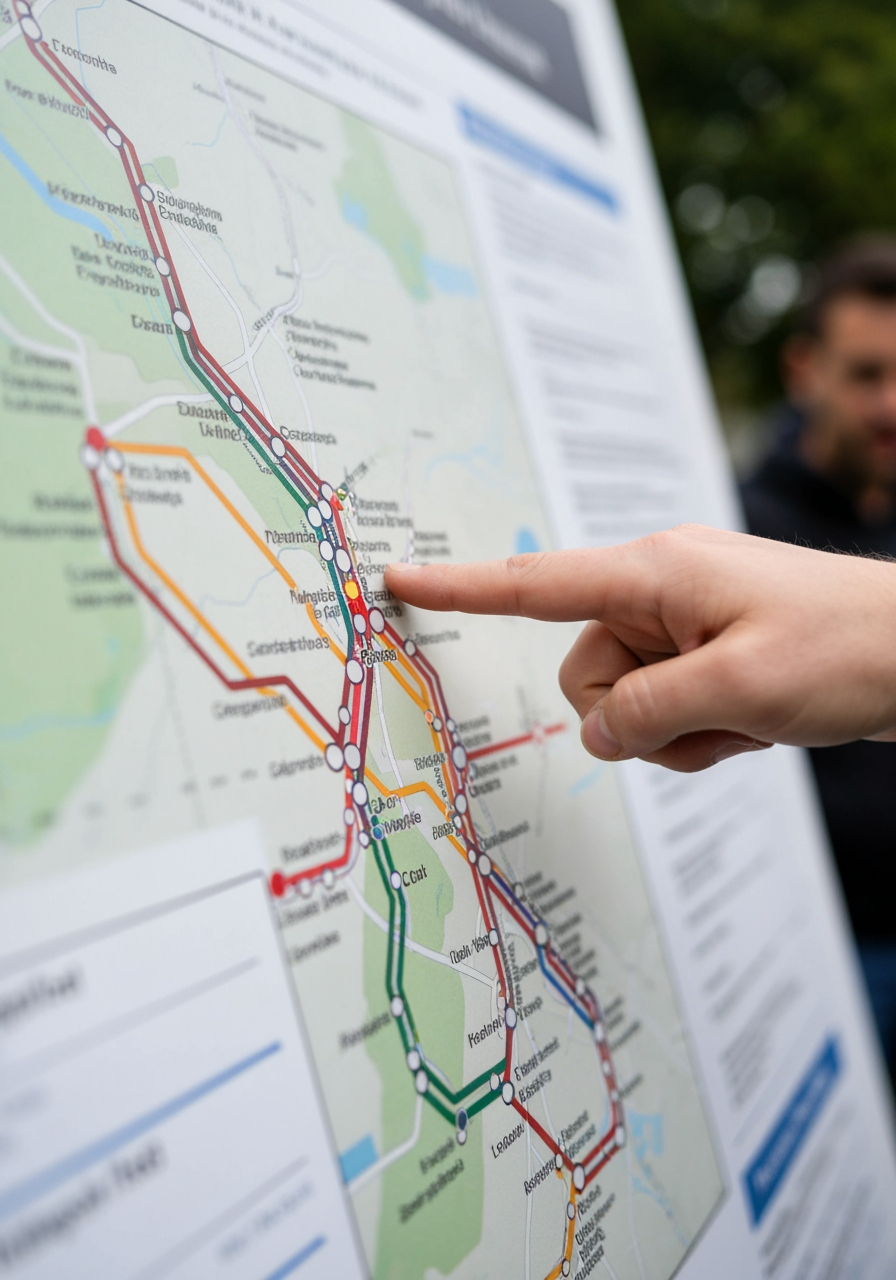
University at Buffalo architecture students unveiled a series of proposals on Friday aimed at expanding Buffalo’s Metro Rail system, highlighting potential new routes and long-discussed extensions that could reshape regional transit. The presentation, held in Buffalo, brought together students, faculty, and regional transit advocates to explore the future of public transportation in the city.
The student-led initiative focused on two primary Metro Rail extension concepts. One of the key proposals involved a new line connecting the city’s central business district to the Buffalo Niagara International Airport—an idea that has been circulating since the 1960s but has yet to be realized. The second proposal examined the potential addition of four new stations, with students analyzing both benefits and logistical hurdles associated with each.
Jim Gordon, representing Citizens for Regional Transit, noted that the students’ work offered valuable insights into how the Metro Rail system might grow. The proposals were designed not only to envision the physical expansion of the rail network but also to generate public interest and spark discussion around the city’s transportation future.
Brad Wales from the University at Buffalo emphasized the practicality of the students’ ideas, pointing out that Buffalo’s existing rail infrastructure and railroad rights-of-way provide a feasible foundation for future extensions. These existing corridors could significantly ease the process of expansion, both in terms of cost and construction logistics.
However, the students also identified significant design challenges, particularly in relation to the proposed Beltline station. The complexities of integrating the station into current infrastructure and the surrounding urban fabric were highlighted as key obstacles that would need to be addressed in any future development.
The discussion also touched on the broader context of transit development costs. As a point of comparison, Seattle’s recent 3.5-mile light rail extension came with a price tag of $7 billion, underscoring the financial scale of such projects and the importance of careful planning.
As of now, no formal plans have been adopted, but the student presentations have helped to reinvigorate conversations about expanding Buffalo’s transit options. The proposals serve as both a learning exercise for the students and a potential blueprint for policymakers and transit advocates interested in advancing the region’s transportation infrastructure.








Leave A Comment