
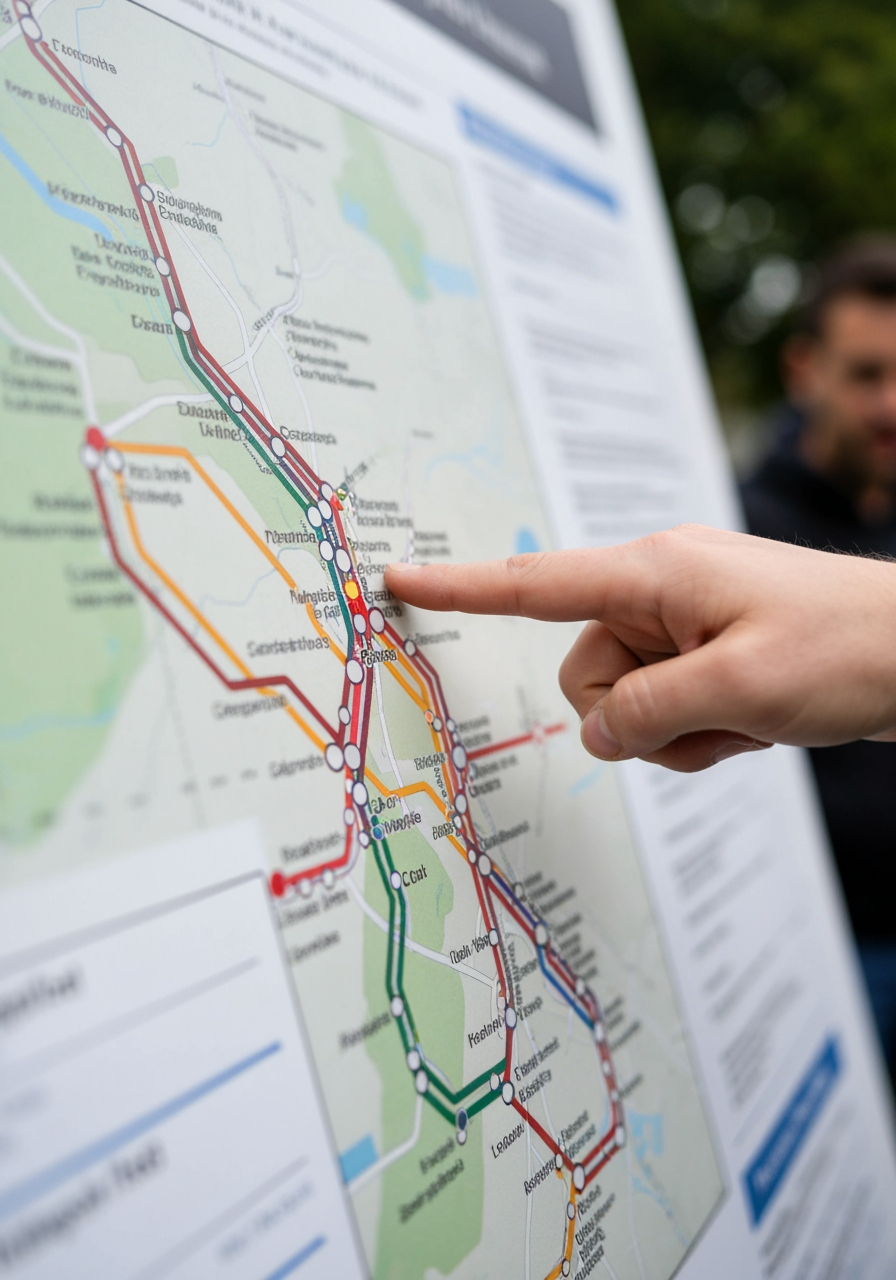
Architecture students at the University at Buffalo unveiled a series of proposals on Friday aimed at expanding Buffalo’s Metro Rail system, with a particular focus on a long-envisioned extension connecting downtown to the Buffalo Niagara International Airport.
The presentations, held in Buffalo, were part of a broader effort to reimagine the region’s public transit infrastructure and to build momentum toward formal feasibility studies. The students’ plans included two major expansion concepts, one of which outlined a new rail line stretching from the city’s central business district directly to the airport. The proposals also identified four potential new station sites along the suggested routes.
Jim Gordon of Citizens for Regional Transit noted that the student proposals offered thoughtful approaches to Metro Rail extensions while also highlighting the real-world complexities of designing new stations. These challenges underscore the intricate balance between visionary planning and practical implementation.
Brad Wales, a faculty member at the University at Buffalo, emphasized that the region’s existing railroad rights of way present a significant opportunity. According to Wales, these corridors could make future rail expansions more feasible and cost-effective, potentially reducing the need for costly land acquisition or disruptive construction.
The idea of linking the airport to downtown Buffalo via light rail is not new. It has circulated since the 1960s but has yet to advance beyond the conceptual stage. Advocates argue that such a connection could spur transit-oriented development and better integrate the airport into the region’s public transportation network.
The discussion also placed Buffalo’s ambitions in a national context. For example, Seattle’s recent light rail extension cost $7 billion for just 3.5 miles of track, highlighting the potential financial scale of such infrastructure projects.
While the proposals remain academic at this stage, they contribute to an ongoing dialogue about the future of transit in Western New York. Supporters hope that the ideas presented will help catalyze official studies and planning efforts in the years to come.
For now, the Metro Rail extension remains a long-term vision, but Friday’s event marked a meaningful step in fostering community engagement and exploring viable paths forward.









Leave A Comment